About Us

Saturday, October 31, 2015

Why Nursing?


  • Due to the nursing shortage and aging populations, nurses are in constant demand, and there are many jobs available. They are also the first heath care professional a person sees, and spend the most time with the patient, this increases their importance.
  • According to the U.S. Department of Labor, the employment for registered nurse is expected to grow 19% by 2022. 
  • There is also a wide variety of specialties. There are 104 different specialties and different nursing degrees to choose from. We have gone into depth on many of these specialties throughout our blog.
  • As a nurse you are also able to move up in the field and get advanced training and degrees.
  • There are a variety of work places ranging from hospital, doctors offices, nursing homes, outpatient facilities, and home health care.


  • Nurses can have careers in almost any location worldwide. There are many places looking for nurses all over the world because there is always a high demand in the field. 
  • Work schedules can be flexible. Shifts range from 4-12 hours on average, and are on weekends or weekdays
  • According to U.S. News report, "In 2012, registered nurses made an average salary of $68,910, which is pretty good pay compared with some other health care professions on this year's Best Jobs list." So as you can see from that statement, nurses make a nice amount of money.
Above are just a few of the many tangible benefits of nursing, there are millions of other reason personal to each individual nurse and nursing student. Nurses make an impact on the lives of people everyday, and it is a very rewarding career.

-Casey W

"Registered Nurse: Salary." Registered Nurse Salary Information. U.S. News & World Report LP, n.d. Web. 02 Nov. 2015.
"Why Be a Nurse?" Why Be A Nurse. Johnson and Johnson Services, Inc, n.d. Web. 01 Nov. 2015.


Monday, October 26, 2015

Prompt 5: Observing Community


Here at Michigan State University, the organizational club we have for nursing students is called the MSU Nursing Student Association. It's open to pre nursing and nursing students, and they currently have over 350 members, including myself. In the two meetings they've held so far, we've been exposed to many different volunteer programs, study abroad trips and have had guest speakers.


The President, Vice President and other members of the committee all present themselves as professionals- wearing professional wear and coming prepared with the topics to be discussed. When there was a career fair, where business professionals came to talk to students who were looking at future jobs, there was a wide emphasis on dress code. They implied that the wear was business professional-expecting girls to dress modestly and professionally, no jeans and no sweatpants. From this, I gained that the appearance is extremely important to this group.

If you are involved in this group, you have certain requirements to be considered and "active" member. Specifically for pre nursing students, its required that you attend two of the monthly meetings and gain two points, which are built off of volunteering. There are a wide variety of ways to volunteer, which included working in retirement homes, with children and at blood donations. It's clear that they are extremely involved in our community, and want to present themselves that way.

The main way of communication is emails and social media. They have both a Twitter and Facebook account, that you can follow and add to find out about meetings and events. I've mostly used D2L, a communication method at Michigan State, as a way to sign up for volunteer programs and recaps of the meetings.

Overall, the Nursing Student Association is extremely professional and dedicated towards the community. I feel as if it is a great thing for other nursing students and myself to be involved in, because of the opportunities they provide for you to be active in the community you live in. If you are at another college and also planning on going into the nursing field, look into finding a nursing association club to become involved in!

-Brooke B.

Sunday, October 25, 2015

Talk Topic: "Learning the Language" Oct. 19.

For my writing class this week, our "talk topic," which is a basis for discussion on things that we can relate to real life, was based off of an article written by a doctor. This doctor, Perri Class, talked about how she was exposed to a new language that she had to expose herself to, learn the meaning of, and essentially use to communicate throughout the hospital. 
I was excited to read the Talk Topic for this week, as it pertained to the medical field, which is my interest of study. Within the first paragraph, I was able to recognize that there was more to learn about the medical field than just the human body. I suppose each profession would have to have their own linguistics. Business professionals would not be using the same vocabulary as someone in the medical field, because they have two polar opposite tasks at hand.

In her writing, she used some vocabulary terms that I had never heard before in my life, which lead me to looking up the definitions. Some of these words included “eponymous” and “euphemism.” I enjoyed how the author, who is an actual doctor, described her personal experience in “learning the language” of her job. She gave a wide range of terms and jargon used in the medical field, and always made sure to describe what they meant to ensure that the reader could also understand the article.  By doing this, she was able to get across what I believe her main point to be, which was that you will be learning not only how to perform a new job, but also how to “speak their language,” because you will have no idea what it means until your exposed to it. As you use it more and more, this new language will become native to your tongue. 

Perri Klass is describing above the satisfaction she received from "learning the language" of her profession.


The importance of learning the language shows in her examples. If she never asked what something meant, she would have no idea what was going on with patients. This was encouraging for me, because it showed that not everyone will know what is being said, and that it’s okay to ask questions if you don’t know. After doing some research for my blog topic articles, I’ve been exposed to some medical jargon that I also had to look up, which is one way I’ve began to learn the language of the nursing profession. The article was also another exposure for me to the terminology. As I continue my journey through nursing school, I’m positive that I will be exposed to more and more examples like the author described, and there will be situations where I have to ask what a certain abbreviation or terminology means. That is how I will “learn the language” of my future profession.


Friday, October 23, 2015

Certified Nurse Midwife

While I was searching for a topic of discussion for this weeks blog post, I ran across a title of the "Top 20 Nursing Career Specialties".  The number one on the list was a Certified Nurse Midwife.  Coming from a family with 20 cousins on one side, me being the oldest girl, I have worked with a lot of babies.  As previously stated, it is my dream to become a Neonatal Nurse. However, working beside an obstetrician delivering babies would be miraculous.

Source: google images
What do they do?

Certified Nurse Midwifes are often found working alongside the OB and working with pregnant patients.  Often times these nurses follow patients throughout their entire pregnancy, providing advice and check-ups to inform her on her present prenatal status/statistics.  Another key responsibility of this career is that a nurse midwife assists in delivering babies.  On occasion midwifes may have to deliver babies on his/her own.  Following birth, educating the patient on how to care for the newborn and providing routine check-ups is under the responsibility of this particular type of nurse.


Academic Requirements:

-Earn Registered Nurse (RN) license
-2-4 years working in obstetrics
-Post obstetric working, completion of the nursing midwife education is necessary
-Apply for certification

Other information:

-On average, the base salary of a certified nurse midwife is about $93,000.
- The demand for midwives is expected to increase 22% through 2018

-Samantha Beck

Sources: http://www.thebestschools.org/blog/2013/10/18/best-nursing-career-specialties-top-20/

"Best Nursing Career Specialties: The Top 20 | The Best Schools." The Best Schools. Certified Nurse
        Midwife, 18 Oct. 2013. Web. 23 Oct. 2015.

Sunday, October 18, 2015

Perioperative Nursing

What is a preoperative nursing? 
Preoperative nursing is a broad term for a registered nurse that works inside of an operating room in a facility that performs surgical procedures.

Subfields of preoperative nursing:

Scrub nurse: Just like demonstrated in the picture below, the scrub nurse passes instruments to the surgeon
As a scrub nurse gets the instruments ready, surgeons Andrew Lowy and Hanna Copeland probe James Vanderpool's abdomen for signs of cancer. When they find it, they cut it out.

Circulating nurse: Looks out for the patient while he/she is under anesthetics. They manage who sees the patient, monitor who goes in and out of the patients room, and make sure everyone in the operating room is following proper procedure.

(Circulating nurse is on the left and the scrub nurse is on the right)

Nurse anesthetist (see other blog post for more details): Nurses that are qualified to administer anesthesia to the patient.
Operationsbild


Salary: Depending on the subfield and experience, on average preoperative nurses make between $40,000 to $84,000 (Mayo Clinic)

Casey W

"Mayo School of Health Sciences." Perioperative Nursing. Mayo Foundation for Medical Education and Research, n.d. Web. 18 Oct. 2015.

"What Does A Circulating Nurse Do?" What Does A Circulating Nurse Do?Nursing Explorer, n.d. Web. 18 Oct. 2015.

Friday, October 16, 2015

Pediatric Nurse

What is a pediatric nurse?

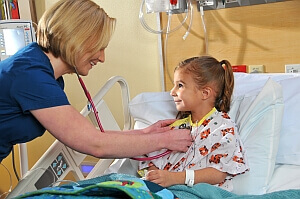
This career in nursing is ideal for those who desire an occupation in the nursing field and who also love to work with children.  A pediatric nurse provides care to children from birth to adolescence.  Most of the issues dealt with in this field are acute, such as ear infections, growth and development problems, asthma, and respiratory difficulties.


Job Environment

-Hospitals
-Clinics
-Long Term Care Clinics
-Home and Community Agencies

What are the pros and cons of this career?

Normally working with children can be difficult.  It is expected that sick children will be more of an issue to deal with, as are most people from all ages.  Some issues pediatric nurses encounter include lack of cooperation, grief from families, and other conflicts.  However, the field involves a significant amount of teamwork, builds relationships, and can teach children about health and its importance.


What is the education required?

-Bachelors/Associates Degree in Science in Nursing
-NCLEX exam to become a Registered Nurse
-Specialization in Pediatrics

-Samantha B.


Sources: http://www.nurse.com/students/CareersInNursing/Specialties/PED.htm

"Nursing News, Nursing Careers, Nurse Continuing Education, Nursing Forums and More!"      Nurse.com- Nursing News, Nursing Careers, Nurse Continuing Education, Nursing Forums and More! Journal of Pediatric Nursing, 2013. Web. 16 Oct. 2015


Tuesday, October 13, 2015

Prompt 2: Defining Ethics in Nursing

This photo, from the American Nurses Association, shows the importance of "ethics" in the nursing profession.

When I think of nurses, my mind goes towards one main characteristic: they are compassionate. Being able to care so selflessly for other families shows that not just anyone could do this job, and do it well. Below, I found the nine main codes of ethics for nurses across America. What exactly are code of ethics? According to BusinessDictionary.com, code of ethics can be defined as follows: "A written set of guidelines issued by an organization to its workers and management to help them conduct their actions in accordance with its primary values and ethical standards."
I decided to bold main words I felt were most important in describing attributes a nurse holds.

Code of Ethics (According to the ANA)
1) The nurse practices with compassion and respect for the inherent dignity, worth, and unique attributes of every person.
2) The nurses primary commitment is to the patient, whether an individual, family, group, community, or population.
3) The nurse promotes, advocates for, and protects the right, health, and safety of the patient.
4) The nurse has authority, accountability, and responsibility for nursing practice; makes decisions; and takes action consistent with the obligation to promote health and to provide optimal care.
5) The nurse owes the same duties to self as to others, including the responsibility to promote health and safety, preserve wholeness of character and integrity, maintain competence, and continue personal and professional growth.
6) The nurse, through individual and collective effort, establishes, maintains, and improves the ethical environment of the work setting and conditions of employment that are conducive to to safe, quality health care.
8) The nurse collaborates with other health professionals and the public to protect human rights, promote health diplomacy, and reduce health disparities.
9) The profession of nursing, collectively through its professional organizations, must articulate nursing values, maintain the integrity of the profession, and integrate principles of social justice into nursing and health policy.


My personal ethics intercorrelate with those of nurses in many ways. I've always found taking responsibility for myself and treating others with respect at the top of my list of ethics. Integrity is an important quality that I like to hold on to, as sometimes people can get caught up and lose sight of their integrity. Working with others towards one main goal can also be included in my code of ethics. You can only do so much individually; by working with people, you are able to bring in new ideas and ultimately make turn something good into something great.

I feel as if people do have a pretty basic understanding of the ethics of nurses. They can comprehend that their job is to help when others are sick, and compassion is a necessary attribute in having good bedside manners. Nurses work with doctors and other nurses to help provide the best care available to each patient, which I'm sure each and everyone of us has seen when we've been in a doctors office or hospital.

Ethics are important in any field of study that you are considering going into, or one that you already could be in. They are important, because they keep sight of what is important and gives you a reminder of why you decided to go into the profession you are in. It was nice to read these and see that the code of ethics and my code of ethics go hand in hand. I've really found the right future job for me, and I hope you all reading this can say the same.
-Brooke B.

RESOURCE:

"Code of Ethics for Nurses With Interpretive Statements." Nursing World.  American Nurses Association, 2015. Web. 13 Oct. 2015.

https://www.drpetersenobgynal.com/services-procedures/breast-cancer-awareness-month.php
Think Pink! As a prospective nurse, I find it important that raising awareness towards cancer research is highly important. October is breast cancer awareness month. Doing little things, such as changing a profile picture on social media to a pink ribbon, or even wearing one, can raise awareness to these diseases that affect millions of families per year.